
What's the biggest mistake beginners make in the gym?

Beginners usually do not fail because they lack motivation. They struggle because they try to do too much, too soon, without a simple plan or reliable feedback on form. The result is soreness, frustration, and avoidable setbacks. This list breaks down the biggest mistake beginners make in the gym, plus the common workout mistakes and gym mistakes to avoid if you want steady progress.
Why do beginners get stuck so quickly?
Most beginners get stuck because they confuse intensity with effectiveness. A workout does not have to leave you destroyed to be useful; it has to be repeatable, well-executed, and matched to your current ability. Mayo Clinic guidance emphasizes proper technique, starting with manageable resistance, and getting help from a trainer or fitness specialist when you are unsure about form.
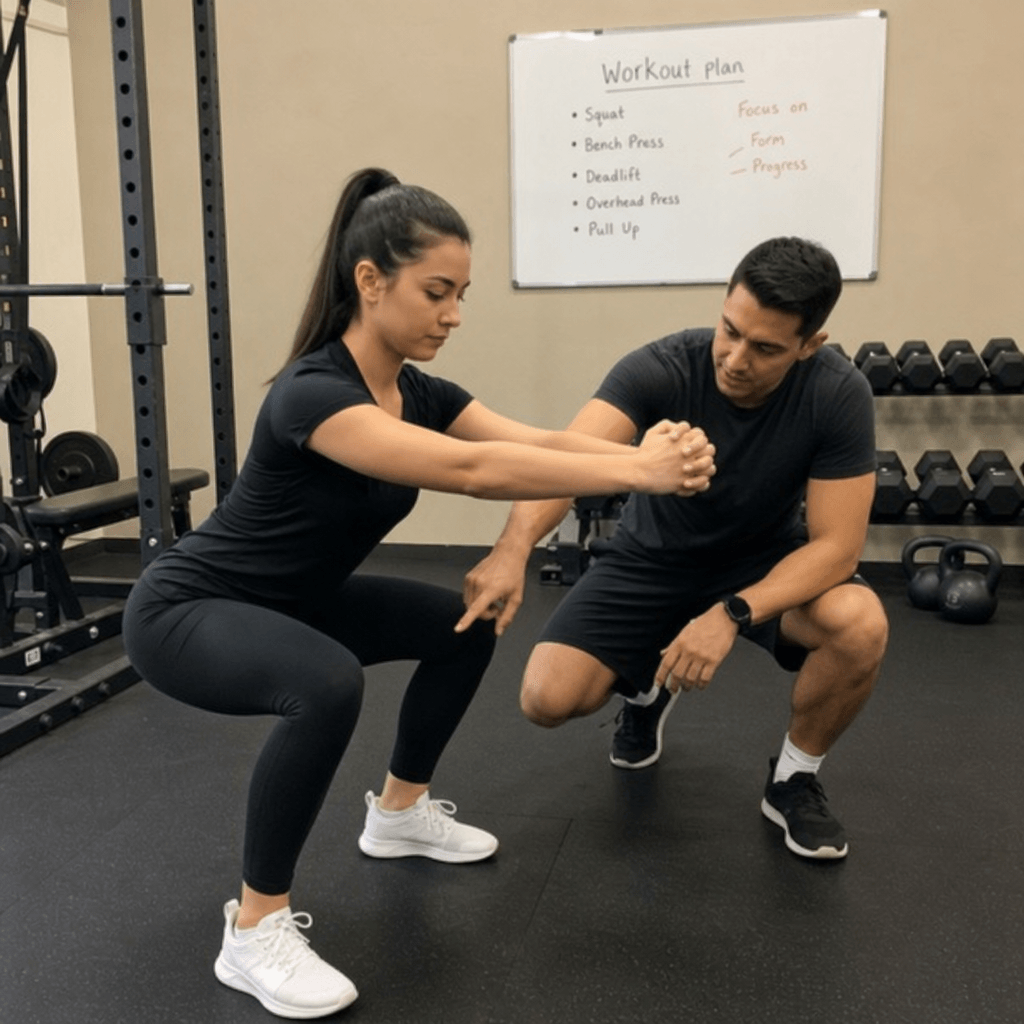
1. Training too hard before learning the basics
The biggest mistake beginners make in the gym is chasing advanced effort before building basic skill. That can mean maxing out weights, copying intense social media workouts, or doing too many exercises in one session. Hard work matters, but only when your body can recover from it and your technique can support it.
A better approach is to leave the gym feeling like you could train again in a day or two. Choose a few simple movements, practice them consistently, and increase difficulty gradually. The American Heart Association notes that strength and resistance training is one part of a balanced fitness routine, alongside endurance, flexibility, and balance work.
2. Lifting with poor form to move more weight
Bad form is one of the most common workout mistakes because it can feel productive in the moment. You may lift heavier, finish more reps, or look like you are pushing harder. But if the target muscle is not doing the work, the workout becomes less effective and more stressful on joints and connective tissue.
Good form usually looks controlled, stable, and repeatable. You should be able to move through the exercise without bouncing, twisting, or losing your position. Mayo Clinic’s weight training guidance specifically stresses that proper technique matters and that beginners should ask a qualified trainer or fitness specialist for help if they are unsure.
3. Skipping the warm-up
A warm-up is not wasted time. It prepares your body for the workout by gradually increasing effort and helping you practice the movement patterns you are about to use. Going straight from sitting all day to heavy lifting or fast cardio can make the first few sets feel awkward and rushed.
Keep it simple: walk, cycle, row, or use light dynamic movements for five to ten minutes, then do easier versions of your first exercise. Mayo Clinic recommends warming up before strength training and notes that cold muscles are more prone to injury.
4. Following random workouts instead of a plan
Random workouts can be fun, but they make progress hard to measure. If every session is different, you may not know whether you are getting stronger, improving endurance, or simply staying busy. Beginners often need less variety, not more.
A useful beginner plan repeats key movement patterns: squat, hinge, push, pull, carry, and core stability. Repeating these movements lets you improve skill while tracking weight, reps, sets, and comfort. Once the basics feel solid, variety becomes easier to use without losing direction.
5. Doing too many exercises in one session
More exercises do not automatically mean a better workout. A long list can dilute your effort, drain your focus, and make it harder to learn proper technique. Beginners often benefit from doing fewer movements with better attention.
A practical full-body session might include one lower-body exercise, one upper-body push, one upper-body pull, one core movement, and optional low-intensity cardio. That is enough to train the body without turning the session into a two-hour guessing game. The goal is not to touch every machine in the gym; it is to finish a workout you can repeat and improve.
6. Ignoring rest and recovery
Progress happens between workouts, not only during them. If you train hard every day without enough sleep, food, hydration, or rest, your performance can drop quickly. Beginners sometimes mistake fatigue for discipline, then wonder why motivation disappears.
Recovery does not mean doing nothing forever. It means giving muscles and joints enough time to adapt before adding more stress. Sudden spikes in training intensity or volume can increase overuse injury risk, so gradual progression is safer and more sustainable.
7. Comparing yourself to experienced lifters
The gym can make beginners feel like everyone else knows exactly what they are doing. That comparison often leads to rushed decisions: heavier weights, faster workouts, advanced exercises, or skipping foundational work. But experienced lifters usually look confident because they have practiced the same basics for a long time.
Your starting point is not a problem. It is the information your program should be built around. If an exercise feels confusing or painful, scaling it back is not failure; it is smart training.
8. Treating cardio and strength as enemies
Some beginners believe they must choose between lifting weights and doing cardio. In reality, most people benefit from both. Strength training helps build muscle and improve functional capacity, while cardiovascular training supports heart health and stamina.
The key is balance. If your main goal is strength, do most of your energy-demanding lifting before long cardio. If your main goal is endurance, prioritize cardio and use strength training to support durability. Either way, avoid turning every session into an all-out test.
9. Not tracking anything
If you do not track your workouts, you are relying on memory and mood. That makes it easy to repeat the same effort for months without realizing it. A simple log can reveal whether you are adding reps, improving control, resting enough, or jumping ahead too quickly.
Track only what helps:
Exercise name: so you can repeat the same movement.
Weight or resistance: so progression is visible.
Sets and reps: so volume stays manageable.
Difficulty level: so you know when to increase or hold steady.
Notes on form or discomfort: so patterns are easier to catch.
10. Quitting when progress feels slow
Early progress can be exciting, but it is rarely perfectly linear. Some weeks feel strong, while others feel flat. Beginners often quit because they expect every workout to be better than the last.
Instead, judge progress over several weeks. Better form, more confidence, improved consistency, and less soreness are all signs that training is working. The gym rewards patience more than perfection.
A simple beginner checklist for safer progress
Use this checklist before adding more weight, more exercises, or more gym days:
You can complete each rep with control.
You know which muscle or movement the exercise is meant to train.
You can recover before your next session.
You are not pushing through sharp or unusual pain.
You have repeated the workout long enough to measure progress.
You are increasing one variable at a time, not everything at once.
You know when to ask for help from a coach, trainer, or qualified professional.
FAQ
What should a beginner do first at the gym?
Start with a simple plan, a warm-up, and a few beginner-friendly exercises you can perform with control. If you are unsure how to use equipment or perform an exercise, ask a trainer or fitness professional for guidance before increasing weight.
How many days a week should a beginner work out?
Many beginners do well with two to four structured workouts per week, depending on their schedule, recovery, and goals. The best routine is one you can repeat consistently without feeling run down.
Should beginners hire a personal trainer?
A personal trainer can be especially helpful if you feel unsure about form, equipment, exercise selection, or how to build a plan. Even a few coached sessions can help you avoid gym mistakes to avoid later.
Is soreness a sign of a good workout?
Not always. Mild soreness can happen, especially when you are new, but extreme soreness can interfere with consistency. A good workout should move you forward without making normal movement miserable for days.
When should I stop an exercise?
Stop if you feel sharp pain, dizziness, loss of control, or discomfort that does not feel like normal effort. Adjust the movement, reduce the load, or ask for professional help.
Start with a smarter plan
The biggest mistake beginners make in the gym is not being new; it is trying to train like an advanced athlete before building the foundation. Focus on form, consistency, gradual progression, and recovery, and you will avoid many of the most common workout mistakes.
If you want help building a plan that fits your body, goals, and experience level, contact us today. Our service provider can help you start with confidence, train safely, and make your gym time more effective.