
Can beginners build muscle quickly?

Yes, beginners can often build muscle noticeably faster than experienced lifters because their bodies are highly responsive to new training stress. The real key is not chasing extreme workouts or miracle products; it is following a consistent beginner fitness plan built around progressive strength training, enough food, quality protein, recovery, and patience. This guide breaks down the strength training basics, practical muscle gain strategies, and simple habits that make beginners muscle building safer and more effective.
How quickly can beginners build muscle?
Most beginners can start seeing early changes in strength within the first few weeks, while visible muscle growth usually takes longer and depends on training consistency, nutrition, sleep, genetics, and starting point. So, can beginners build muscle quickly? Yes, compared with advanced lifters, beginners often have a strong “new lifter” response, but building muscle fast still requires steady effort rather than random hard workouts.
A new lifter does not need a complicated routine to make progress. In fact, the best beginner workout guide is usually simple: train major muscle groups two to four times per week, practice good technique, add resistance gradually, and recover well between sessions. Early strength gains may come partly from learning the movements, but over time, that practice supports real muscle growth.
The mistake many people make is trying to do everything at once. They add too many exercises, train to exhaustion every day, copy advanced bodybuilders, and then burn out. A smarter approach to muscle building for beginners is to focus on repeatable habits that can be maintained for months.
The foundation is progressive strength training
Strength training for beginners works best when it is built around progressive overload. That simply means asking your muscles to do a little more over time. You might lift slightly heavier weights, complete more reps with the same weight, improve your form, add a set, or slow down the movement to increase control.
Weightlifting for beginners should not feel chaotic. Each workout should have a purpose, and each exercise should be chosen because it trains a useful movement pattern. The goal is not to leave the gym destroyed; the goal is to give your body a clear signal to adapt.
Core movement patterns to learn
A strong muscle building program for beginners usually includes these patterns:
Squat pattern: goblet squats, leg presses, or bodyweight squats to train the thighs, glutes, and core.
Hip hinge: Romanian deadlifts, hip thrusts, or cable pull-throughs to build glutes, hamstrings, and posterior-chain strength.
Push: push-ups, dumbbell presses, or machine chest presses for chest, shoulders, and triceps.
Pull: seated rows, lat pulldowns, or assisted pull-ups for the back and biceps.
Core stability: planks, dead bugs, carries, or Pallof presses to improve control and posture.
These exercises create a balanced base. Once you are comfortable, you can add isolation work such as curls, triceps pressdowns, lateral raises, and calf raises, but they should support the plan rather than replace the basics.
A simple beginner workout structure
A practical muscle building workout plan for beginners does not need to take over your life. Three full-body sessions per week is a strong starting point because it gives frequent practice without overwhelming recovery. You can train on nonconsecutive days, such as Monday, Wednesday, and Friday, or any schedule that gives you rest between hard sessions.
Here is a simple structure you can adapt:
Warm up for 5–10 minutes. Use light cardio, mobility drills, and easy practice sets.
Choose one lower-body exercise. Squat, leg press, or split squat for 2–4 sets.
Choose one hip-hinge exercise. Romanian deadlift, hip thrust, or glute bridge for 2–4 sets.
Choose one push exercise. Dumbbell press, push-up, or shoulder press for 2–4 sets.
Choose one pull exercise. Row, pulldown, or assisted pull-up for 2–4 sets.
Finish with core or accessory work. Add 1–3 exercises if time and energy allow.
For most muscle building workouts for beginners, 8–12 controlled reps per set is a useful range, though lower or higher reps can also work. Start with a weight that feels challenging but manageable. If your form breaks down, the weight is too heavy for now.
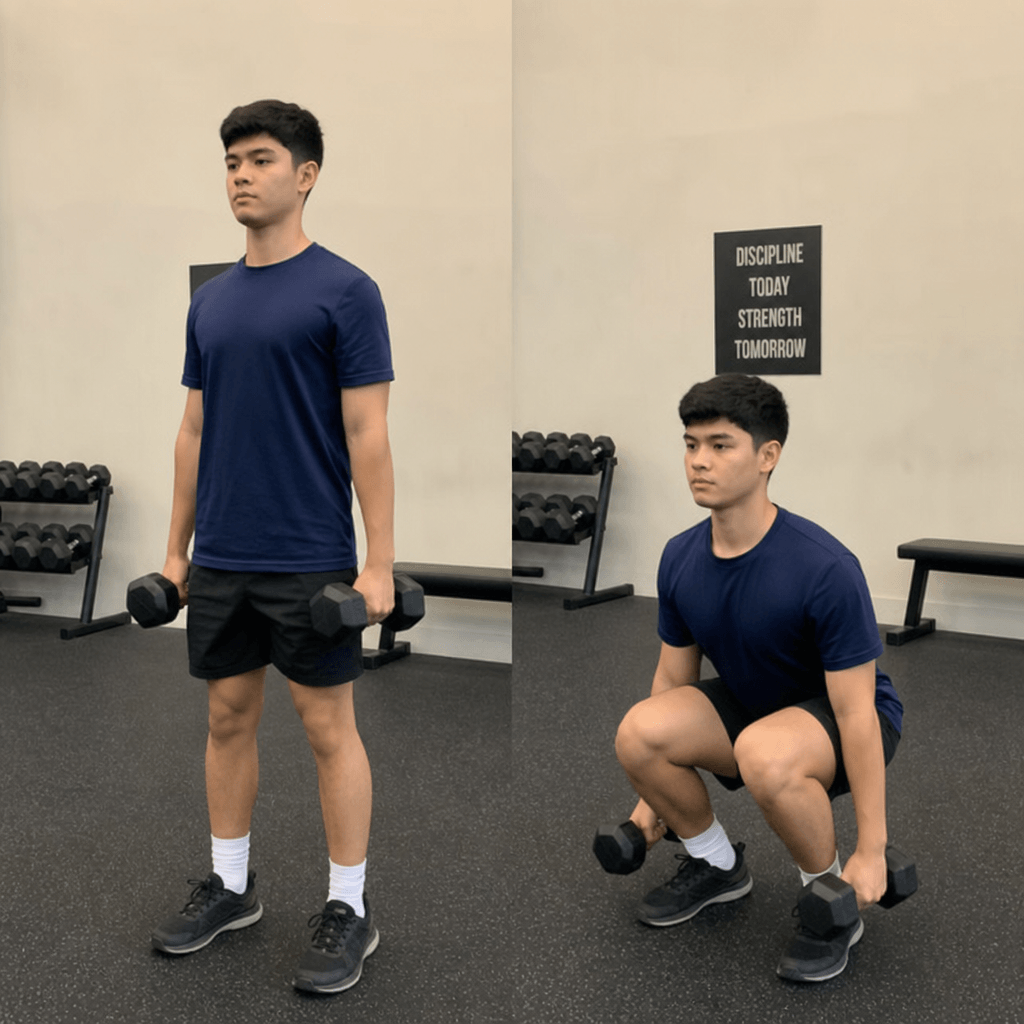
A sample weekly beginner fitness plan
This is not the only way to train, but it shows how a balanced week can look:
Day 1: Squat, dumbbell bench press, seated row, Romanian deadlift, plank.
Day 2: Light activity, walking, mobility, or rest.
Day 3: Leg press, overhead press, lat pulldown, hip thrust, dead bug.
Day 4: Rest or easy cardio.
Day 5: Split squat, incline dumbbell press, cable row, hamstring curl, side plank.
Days 6–7: Rest, walking, stretching, or recreational activity.
This type of muscle building workout plan beginners can actually follow is valuable because it balances effort and recovery. Consistency beats intensity when intensity is so high that you cannot repeat it.
What should beginners eat to build muscle?
Beginners should eat enough total calories, prioritize protein, include carbohydrates for training energy, and choose mostly nutrient-dense foods. Training creates the signal for growth, but food provides the raw materials. Without enough nutrition, even a well-designed muscle building workout plan for beginners will feel harder than it needs to.
Protein matters because it supports muscle repair and growth. Good options include lean meat, poultry, fish, eggs, Greek yogurt, cottage cheese, tofu, tempeh, beans, lentils, and protein powder if needed. Carbohydrates also help performance, especially if you train with moderate to high effort. Rice, oats, potatoes, fruit, whole-grain bread, and pasta can all fit well.
Healthy fats support overall health and help meals feel satisfying. Include foods such as olive oil, avocado, nuts, seeds, and fatty fish. You do not need a perfect diet, but you do need enough consistency for your body to recover and adapt.
Practical nutrition checklist
Use this checklist before worrying about advanced diet tactics:
Eat a protein source at most meals.
Include carbohydrates before or after training if energy is low.
Drink enough water throughout the day.
Avoid crash dieting while trying to gain muscle.
Build meals around foods you can prepare and repeat.
Track body weight, performance, or measurements if you need feedback.
One of the most overlooked muscle growth tips is to make eating easier. If you regularly miss meals, keep simple options available: yogurt and fruit, a turkey sandwich, rice bowls, protein smoothies, tuna packets, eggs, or pre-cooked chicken and potatoes.
Recovery turns workouts into results
Muscle is not built during the workout itself. Training challenges the body, and recovery is when adaptation happens. That is why sleep, rest days, stress management, and smart programming matter so much for muscle gain strategies.
Beginners often assume more training automatically means more progress. In reality, muscles, joints, tendons, and the nervous system all need time to adapt. If you are constantly sore, losing strength, sleeping poorly, or dreading workouts, your plan may be too aggressive.
Aim to leave most sets with one to three reps “in reserve,” especially while learning technique. You can work hard without turning every set into a maximum-effort test. This approach helps you practice better form, reduce injury risk, and keep progressing for longer.
Supplements can help, but they are not the foundation
The best muscle building supplements for beginners are the ones that support an already solid training and nutrition routine. Supplements cannot replace progressive lifting, enough protein, adequate calories, or sleep. They can, however, make it easier to fill gaps.
Common beginner-friendly options include:
Protein powder: useful if you struggle to reach your protein needs through food.
Creatine monohydrate: widely used to support strength and high-intensity training performance.
Caffeine: may help energy and focus before workouts, if you tolerate it well.
Basic vitamins or minerals: only helpful when they address an actual dietary gap.
Avoid building your plan around fat burners, extreme pre-workouts, or stacks that promise unrealistic results. If you have medical conditions, take medications, are pregnant, or are unsure whether a supplement is appropriate, speak with a qualified health professional before using it.
Common mistakes that slow beginner muscle growth
Many beginners work hard but struggle because their plan lacks structure. A few small adjustments can make training more productive and much easier to sustain.
Watch out for these common issues:
Changing workouts too often. If every session is different, it is hard to measure progress.
Skipping form practice. Good technique helps target the right muscles and manage injury risk.
Doing too much too soon. Soreness is not the same as growth.
Ignoring nutrition. Muscle gain requires enough fuel and building blocks.
Underestimating sleep. Poor recovery makes workouts feel harder and progress slower.
Comparing yourself to advanced lifters. Your plan should match your current level.
A good beginner plan should feel challenging, not punishing. If you can repeat it week after week while slowly improving, you are on the right path.
Progress is measured in more than the mirror
Visible muscle growth can be motivating, but it is not the only sign that your plan is working. Beginners often improve in ways that show up before major physical changes. You may notice better coordination, more confidence under the weights, improved posture, higher energy, or the ability to complete more reps with the same load.
Track a few simple markers:
Exercises performed
Weights used
Sets and reps completed
Energy levels
Sleep quality
Body measurements or progress photos, if helpful
This information keeps you grounded. If your lifts are improving, your technique is cleaner, and you are recovering well, your body is likely moving in the right direction.
FAQ
How many days a week should a beginner lift weights?
Most beginners do well with two to four strength sessions per week. Three full-body workouts are a practical starting point because they provide enough training frequency while leaving time to recover.
Can you build muscle with bodyweight exercises?
Yes, bodyweight training can build muscle, especially for beginners. Push-ups, squats, lunges, inverted rows, glute bridges, and planks can be effective when they become progressively more challenging over time.
Should beginners bulk to gain muscle?
A small calorie surplus can help muscle gain, but beginners do not always need an aggressive bulk. Many people can start by eating enough protein, training consistently, and avoiding large calorie deficits.
How long should beginner workouts be?
Many beginner sessions can be effective in 45–60 minutes. The workout should be long enough to train major movement patterns with focus, but not so long that quality drops or recovery suffers.
What is the biggest muscle building tip for beginners?
The most important muscle building tips are to train consistently, use progressive overload, eat enough protein and calories, and recover well. Simple habits done repeatedly beat complicated plans done inconsistently.
The takeaway
Beginners can make impressive progress when they stop chasing shortcuts and commit to the basics. A smart plan combines strength training basics, steady progression, good nutrition, enough rest, and realistic expectations. Whether your goal is building muscle fast or simply becoming stronger and healthier, the best first step is a repeatable routine you can follow with confidence.
Contact us to build your plan
Ready to turn these ideas into a clear, personalized path forward? Contact us today and we can help you create a beginner-friendly muscle building plan that fits your goals, schedule, and current fitness level.